Pages

Tampilkan postingan dengan label Q&A. Tampilkan semua postingan

Q&A: Chris Olsen on Somerville

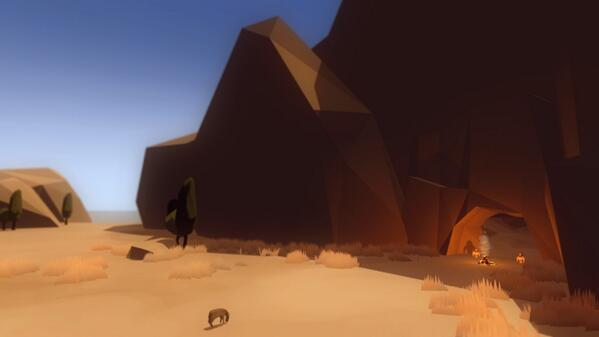
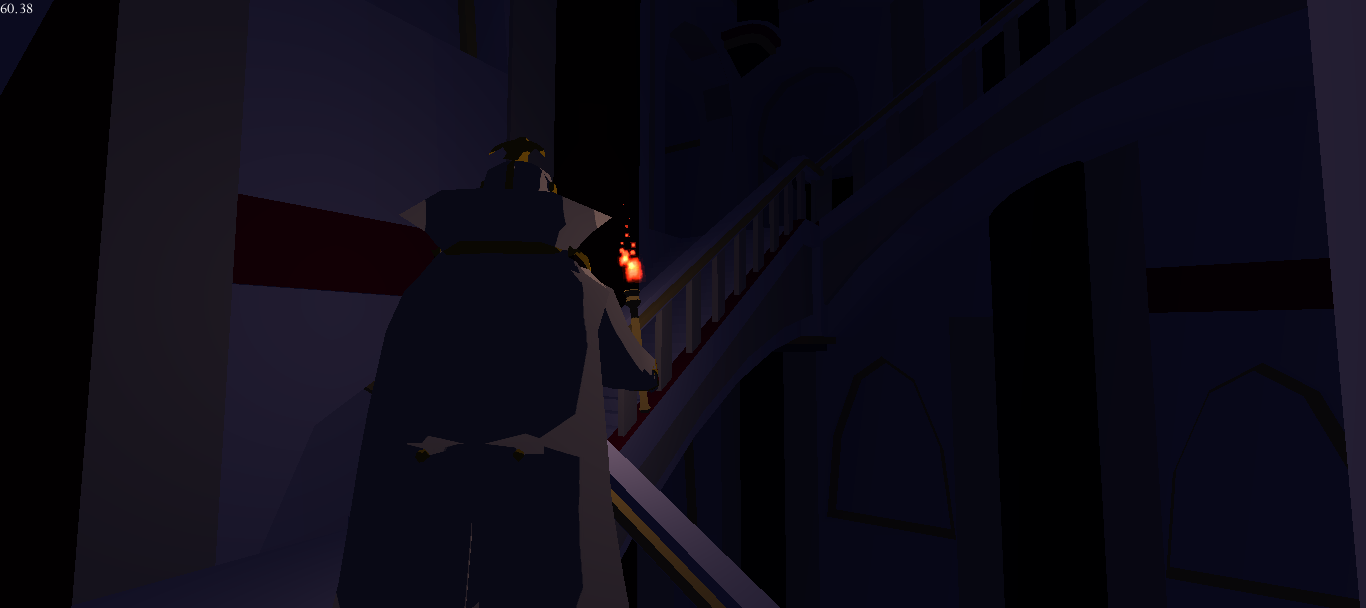
Last week, I wrote about the in-development game Somerville. Developer Chris Olsen was kind enough to answer a few questions about his episodic sci-fi cinematic platformer and reveal more about its gameplay and story.
---

1. What inspired you to get into game development?
I've been a gamer since before I can remember and was always in-love with game development.  Although I've spent the greater part of a decade working in the Film and TV industry I did dabble in the games industry early on at Ninja Theory, in Cambridge as an Animator.  There haven't been many working experiences as positive as that in my time and only due to momentum did I go down a different path.  It was always in the back of my mind to make a game but programming proved a daunting hurdle.  It wasn't until I was introduced to Unity a few years back and it's artist friendly approach that I went full hog on making a game.  At first I was intending to return to games production as a day job to absorb all the facets I wasn't experienced in but there were so many case studies in the Indie scene of lone developers diving in head first and coming out with a positive experience.  So I decided to brave the early mornings and late nights of part time game development.
2. Between The Last Night, Orphan, Hunger, and several others, classic cinematic platformers appear to be making a comeback. What makes the genre so appealing and why did you choose to go that route with Somerville?
There's quite a few factors for these games coming back, I imagine.  One being that the generation that grew up with the classic early 90's Chahi titles are getting older and the tools have become so accessible that instead of wishing someone would bring them back they're just taking the initiative themselves.  I think what we're seeing in the resurgence of all the classic gaming genres from Point and Click adventures, Isometric RPG's and Space Sims are developers freeing themselves from publisher agenda and with the help of platforms like Kickstarter delivering experiences they feel have an audience and were unjustly left by the way side.  
For me, besides Another World being such a core pillar of my childhood gaming life and all the reasons above.  The genre lends itself to all my tastes and capabilities.  I come from a film background and I get a lot of satisfaction from playing with camera framing.  Having the player on a fixed plane grants me the camera flexibility without sacrificing readability (if I do it right).  Animation wise it's a hell of a lot more forgiving and I can smash out character animation without worrying about the player throwing the camera into an area of ugliness.  I can think in terms of storyboard panels rather than 3D space, locking down color scripts or lifting concept art and dropping that exact framing into the game.  
This control over what the player can see allows me to go bolder with my ambition.  I can have spectacular dramatic set pieces and not have to worry too much about what happens outside of the frame.  Condensing the world into such a narrow view sounds limiting but I believe it gives me the opportunity to really finesse and paint the important subtleties into the periphery of the viewer rather than make them look at everything I deem important. 
From a gameplay standpoint a 2.5D platformer speaks for itself in terms of accessibility for me.  Being my first game I can attempt to nail tight mechanics, again, within restricted dimensions.

3. Perhaps the most interesting aspect of Somerville is its narrative framework: a teacher telling her class about the hero of man's war against aliens, as you play during the invasion. What inspired this story structure?
As it stands the narrative structure is still being worked on and subject to change but I can tell you that it will revolve around a story being told by a future generation and it will involve children.  The story structure came from a lot of places.  The game is episodic and with the fleeting attention of children it shall be delivered almost like a "story-time" structure that you used to get in Primary School or a weekly assembly school play.  I'm toying with the idea of zero character dialogue, either written or voiced. I want to use a combination of emotive sound and animation - a narrator will help facilitate this.I've always been a sucker for tales of folk heroes and these days they seem few and far between, mainly due to the information age we function under now.  Children are also a central focus of the story so I thought why not give them one last figure to sing songs and jot notes about in history lessons.

4. One feature you stress in the game's description is its "responsive shooter mechanics." Do you feel these mechanics evolve the core cinematic platformer gameplay? And how expansive will the player's arsenal be in Somerville?
Again, still in-development but yes. My goal is to have engaging, responsive combat mechanics.  I'll probably play down the "shooter" aspect as it gives the impression you'll be blowing aliens away left right and center which would betray the path our protagonist takes (in the beginning at least).  He's fragile and the mechanics reflect a defensive approach but that's not to say he gets his moments to level the playing field.  Whilst the bulk of the game will rest in the the realm of a solitary adventure when the shit does hit the fan I intend to ratchet up the action to a level that borrows more from Treasure shooters than it does of traditional cinematic platformers.  I don't think it's an evolution, just me being a fan of enticing shooter mechanics. The offensive arsenal won't be extensive but I do intend to get as much utility out of the defensive systems as possible.
5. Can you shed some light on the kinds of challenges and dangers players will face?
Sure.  Earlier on the game is focused on survival and avoidance in hostile territory with gameplay hints toward the base combat framework.  Through the hazardous environmental challenges you will learn the fundamentals and hopefully when backed into a corner be able to apply this to fight or escape hostile encounters.  This will be the crux of the prologue, you're a weak fleshy human with an ability that keeps him alive. 
The first full episode will be about empowerment.  Gathering your strength and knowledge to take on greater foes with more intricate offensive strategies.  I won't go into detail on the variations on enemy types and exact hazards as to not spoil anything but they will all be built around the core combat mechanics. 
Overall I want it to be a nice split of puzzle solving, adventuring, topped off with frenetic action and set piece moments.  I recognize it will be a challenge to get the player well versed in the combat mechanics through means other than fighting but I believe the system I have in place will bring it together.

6. How far along is Somerville's development?
Very early.  I've set a deadline for October 2015 to deliver a prologue and proof of concept trailer.  The prologue I intend to be a couple of hours gameplay that scratches the surface of the systems, introduces you to the world and see if people like it.  About 70% of all the features I intend to put into that have been prototyped to the extent that I have faith they won't fall apart when implemented.  I've just started blocking out the levels in Unity from 2D mockups for the actual game and intend to have the prologue playable from start to finish by July.  I still need to wrap up the story treatment before I can 100% commit to churning out levels but that should be done within the next two weeks.  Most of my time right now is split between writing and finessing character control and feel.
You can learn more about Somerville on Olsen's Tumblr blog and Twitter page and follow its development on TIGSource.

Q&A: Bill Lowe on Before

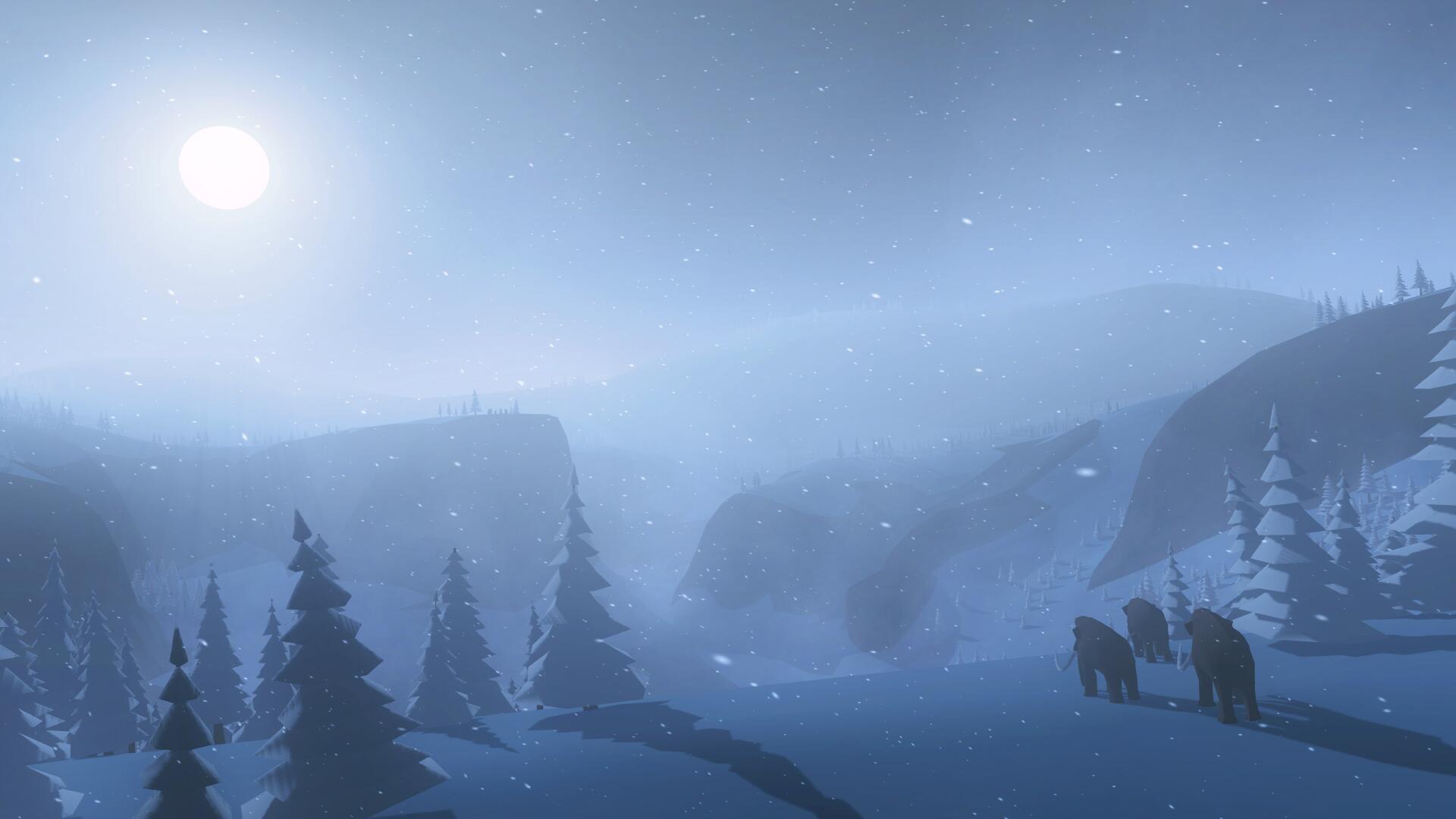
Back in April, I wrote about the in-development game Before. Developer Bill Lowe was kind enough to answer a few questions about this team's prehistoric survival RTS, its progress, and the game's future.
---
1. What inspired you to become an indie developer?

I guess I’ve always wanted to make games, I spent a lot of my teenage years dabbling in mapping and modding with games like Half Life and Unreal. But it wasn’t until Unity came along a few years ago that I started taking things more seriously.

2. Between Before, Let’s Go Camping, Fancy Skulls, Aer, Sustain, and other games, low-poly graphics seems to be quite popular now. Why do you think the visual style is so appealing and what led you to use the style for Before?

I was inspired by a few of the low poly artists and illustrators out there and just started playing with the style really. It’s caught on pretty quickly in the indie scene, I think mostly because it’s a lot quicker to produce than any other style.


3. On your site, “protecting their young” and the idea of developing culture and a visual history implies possible generational legacy feature in Before. Could you talk more about how the player will be able to develop their tribe over time and how this might influence other aspects of gameplay?

Those kind of systems are a big part of what we want to do later on in development, but nothing is set in stone. Initially we’ll have a basic system of inheritance through breeding, and then later things like cultural practices, beliefs and rituals which will develop more slowly. I want this stuff to feel emergent and organic, rather than controlled by the player explicitly.

4. Reading through your blog, I found the information about the interplay between wildlife quite interesting. Can you discuss Before’s ecosystem and animal AI? Will seasonal migrations and other animal behaviors have an effect on a tribe’s survival?

Certainly the wildlife will play a central role in the day to day life of the tribe. The tribe need to hunt, and defend themselves from predators, but perhaps other relationships will form… a pack of wolves may follow a roaming tribe to feed off what they leave behind, for example. Seasons, weather and other larger scale events are definitely on the map, too.


5. Rival tribes and dangerous predators are listed as some of the dangers in Before’s world. Is combat a big part of the gameplay?

In one form or another, yes. But we’re not putting a lot of focus on RTS armies sort of combat, rather things are more focused and smaller in scale, but hopefully with more weight. I’ve always wanted there to be drama in even the smallest of fights, and to have each death feel like an important event.

6. So...will we encounter any saber-tooths or terror birds?

You’ll have to wait and see!

7. Prehistory is rife with cave drawings and records of shamanistic rituals and other divine beliefs. Will deities, worship, and mystical elements be a part of Before?

Absolutely, but I don’t want to go into too much detail on what we have planned. Surprises are fun!


8. Your site mentions ambitious features such as sailing and underground areas. What other features do you envision in a fully-realized Before?

There are lot of ideas we want to explore, big and small - but I’d rather keep some things under wraps for now. I really miss the times when games evoked a sense of mystery, so my hope is to do that with Before - but that means not talking about some ideas.

9. The concept of establishing a tribe and leaving your mark on the world seems ripe for multiplayer. Do you have any plans for online modes or features in Before?

We have some ideas, but they’re pretty vague at this point - right now the focus is on singleplayer.


10. On your site, you mention a playable alpha in the works and a Kickstarter in the future. How is Before’s development progressing? Any estimates on when we can expect an alpha or crowdfunding campaign?

Kickstarter was the plan, but another offer came along and we took a break over the summer while we worked out the details. Development is starting up again now and we’re really excited to push towards a playable alpha, and see where that takes us. Expect to see more news soon!
You can learn about Before on the game's site and developer's Twitter page.

Q&A: Jean Canellas, Alex Kubodera on Death's Gambit

I wrote about Death's Gambit a few days ago and now I was fortunate enough that developers Jean Canellas and Alex Kubodera were able to spare some time to answer a few questions about their promising action RPG
---
This is something I ask all the developers I interview, perhaps a cliched inquiry: What inspired you to become a game developer?
Jean: I knew for sure that I wanted to be a game designer after I made an indie game in highschool called Aftermath. It's very old and crappy, but some people actually said it had some of their favorite boss fights in a game maker game(I really don’t think so). Hearing people discuss the games I made between themselves really pushed me to study game design after high school. 
Alex: It was sort of a natural progression for me. I made RPG board games in elementary school for my classmates to play using Legos and paper cutouts. I incorporated elements of our class work into it by gating progress with quizzes. At home, my father and I would create murals of crazy characters battling it out on a huge piece of paper. Drawing inspired me to develop stories for these characters, but why stop there? I later discovered Fable: TLC, and player choice affecting the world was so intriguing to me, I simply had to create a world of my own.
If there was one thing that caught my eye while reading about your game, it was the art style and atmosphere. Could you talk more about this "alien medieval" world you're crafting and the kinds of environments we may encounter?
Setting our game on an alien planet gives us the creative freedom to do what feels best for the game, in terms of setting the mood for the story and gameplay. Each environment will have its own unique color palette and biome that breeds specific kinds of enemies. That being said, most of our locations have a very dark atmosphere, rich with hidden lore. 
Death's Gambit is described as an action RPG. What RPG elements will the game feature? 
The nature of RPG’s is inhabiting a character and crafting your own adventure. You will meet a motley group of characters, all with their own agenda, offering up advice or misinformation depending on their disposition. Every boss encounter tells part of the story as you develop relationships with them and to the world. Defeating them rewards you with epic loot and a core part of the gameplay is finding the best gear that works for you.
On your Tumblr page, you describe encounters as "complex hack-n-slash puzzles", two styles of gameplay that don't seem immediately compatible. How does combat work in Death's Gambit?
Oh but they are compatible! Most bosses in games could be considered timed puzzles. We want our bosses to focus more on strategic thought-out play as opposed to twitch reflexes and button mashing. For example, we have a prototype boss encounter on an unbalanced platform. It's all about making sure there is enough weight on either side while you fight the boss. On top of that, he has multiple phases that each play with the mechanic in different ways. They are brutal in the dark souls way(you dodge roll and jump out of attacks) and on top of that, each boss has at least one mechanic that forces the player to solve some sort of combat system puzzle. Sometimes bosses will feel very challenging to some players before they realize there are multiple ways of tackling their mechanics.
Another seemingly incongruous inspiration you mention is Spec Ops: The Line, a title lauded for its narrative and subversion of genre tropes. How has that game influenced the narrative and gameplay of Death's Gambit?
This one is a bit harder to explain without going in-depth into the story, so we can’t really say much. We did mention how the game is about collecting epic loot and empowering the player to surpass insurmountable obstacles. Overall I wouldn't expect a lot of genre satire or war themes out of Death's Gambit. 
We should probably exclude “inspired by spec ops” because it gives people the wrong expectation. Regardless, it has influenced us greatly.
Perhaps the most compelling and intriguing aspect of Death's Gambit is the Shadow of the Colossus vibe, as seen in the image and GIFs where your character ascends a towering beast. Why did that game in particular influence development? How central will these battles and enemies be to the overall experience?
So this is a fun anecdote. The giants (called Gaians), were not a part of the initial design “draft” for the game. Jean initially was inspired to add climbing sections after prototyping a grappling hook. It was then that he coincidentally was linked to an “Attack on Titan” video, which sparked an idea to prototype a giant's leg. He was so excited to find out if a giant would look/play well, that he ignored all schoolwork and worked until 6AM. 
The giant prototype turned out to be a huge success. So much so that it impacted the future of the game. We want to make sure it captures the same sensation as SoTC does, in sheer size and impact. The Gaian functions as it’s own level, so we want every climb to take you on a journey that tells a compelling story about the creature and world, while making the combat encounters increasingly more challenging. 
On TIGForum, you mention that Death's Gambit has been worked on full time for several months. What's the state of the game at this time?
Well it’s only been two months, but we have about 40 to 60 minutes of gameplay. You could technically say we have more, but a lot of content is still in the prototype stage. The game is somewhere between 5% to 10% complete.
You can learn more about Death's Gambit here, and follow its development on Tumblr and TIGForum. Keep an eye out for a Kickstarter in the future.

Q&A: Joar Jakobsson on Rain World

By now, if you've been reading my blog, you've seen my previous coverage of Rain World. The game is probably one of my most anticipated indies, besides SuperHOT, Distance, and Hyper Light Drifter. Joar Jakobsson - the man behind Rain World's concept, programming, art, and design - was kind enough to answer a few questions about the game and its development.
---
What inspired you to start a career as an indie developer?
I have always been fiddling with games on the side, but it has always been more of a hobby rather than anything else. I like the game medium because of the interactivity, it’s possible to build worlds that people can actually explore, driven by their own curiosity.

You’ve been developing Rain World for three long years. How does the current game compare to your original vision?
Hehe where do you put the line for “the original version”? I remember many different versions of rain world, both from when it was a few boxes moving around in a maze and later versions as well, that also looked quite different from what we have now, save from the main character. I think the Movement Prototype* I uploaded way back is still around on the internet, if you can find that you can try your hands at a very early version of Rain World. If it really was, though, the world of Rain World wasn’t really invented back then. Short answer - pretty much everything
In your TIGForum devlog, you’ve said that the art style was inspired by graffiti and old cartoons, but what were the inspirations for the world and gameplay?
Oh, that’s a hard one. The world was actually originally intended to have more of a resemblance to the sources of inspiration you mentioned, but drifted to something slightly more realistic. You can still see remnants of those styles though - the monochromatic palette of the levels comes from the old cartoon style, and many of the plants are supposed to borrow part of their shapes from graffiti ornaments. Gameplay has never really had those influences, inspiration for gameplay would rather be something like the harshness of nature.

As a fan of stealth games, I find the AI developed for the game quite fascinating. Was this focus on AI your intention from the beginning? Has it been difficult developing such a layered system?
I have always been interested in AI, so working that into the game has come naturally. Because the game always has had stealth elements, a somewhat decent AI was a necessity. I don’t really know if it was difficult - rather frustrating. Like, there is no mind-bending mathematics going on, just a lot of glitch fixing and endless iteration.
Given the reactive and adaptive nature of the AI, have the creatures ever behaved in an emergent way that surprised you?
Sometimes they do surprise me, but it's rarely mind-blowing because their actions are so limited. The lizards' choices in any given situation are basically all about where to move - the world doesn't allow for many more interactions than that as it's not a puzzle game with a lot of doors and levers and the like. I have tried to get a few interesting interactions in there though, such as lizards occasionally picking up objects and the like. I'd love to spend more time on AI interactions, but it might be a balance where you don't want to end up with the lizards doing so much other stuff that they don't have time to hunt you.
Currently Rain World seems to revolve around a simple gameplay loop: collect bats, evade lizards, return to shelter before the rain falls. Do you have plans to expand these mechanics, perhaps introduce new mechanics, in the full game?
Yeah, followers of the devlog will know about the pups. Basically the game will revolve around the cycle you mentioned, but when you find a few orphaned pups things will get mixed up a bit.

Reading through your devlog on TIGForums, it seems like the relationship between slugcat, lizard, and bat is core to the mechanics and game’s fundamental structure, and at this point, seems finely tuned and well balanced. How would the addition of new creatures and enemies affect and enhance this core system?
This trio of creatures will always be the core of Rain World, throwing in something else might wreck the balance. I do have ideas of other creatures, but they would not be as reoccuring as the lizards and flies. Rather they would be placed in special locations on the world map, and feature as occasional encounters, to spice up and bring excitement to exploring the world.

Also, was the focus on such a small number of creatures due to the limits of your current engine or just an extension of your vision for the game?
It’s sometimes difficult to keep apart limitations and vision, especially in game making where you can only get a good artistic result if you very consciously work with your technical limitations rather than against them. That said, there has never really been a technical limitation to the number of creatures, but it has rather been a question of development time. I early on decided that I wanted few, well made creatures rather than many species with less care given to each one of them.
---
You can support Rain World on Kickstarter, and follow its development on TIGForums. The game was recently Greenlit on Steam.

*Here is the download link for that early Movement Protoype (.rar)*
There are no enemies and you can't balance on poles, but you can climb around and see how the slugcat moves and animates. Player 1 controls are Arrows for movement, K to jump. Player 2 controls are ESDF for movement, Q to jump

A Q&A with Cloudbuilt's developer, Coilworks

I talked about Cloudbuilt's unique blend of open levels and action platforming last week. Now the talented men and women at Coilworks were able to spare some time to answer a few questions about their upcoming rocket-powered platformer.
---
 What inspired you to become indie developers?
Anders Davallius (Creative Director): Well, I have for the longest time known I wanted to be a game developer, and to enter the indie scene is something that just felt natural to me. I am used to be able to be a part of everything that is happening on a game. So to enter a larger team where I could only focus on one thing alone, is nothing I’m interested in for now. So I want to work in a small team with other developers, where everyone has the opportunity to give input and to affect the outcome of the game in every way. Where we can create the type of game we want. Hopefully we will be able to do that while also making a living out of it, and hopefully without the stress and worries associated with being a small indie startup. I think this is something most of us at Coilworks have in common. We love games and want to create them, while also being an intricate part of its creation and affect the outcome. Everything from our games design, its technology, its art, its story, and its everything, is something we care for a lot and want to be a part of.

I think one of the first aspects that stands out is Cloudbuilt’s stylized look. Was this always your intent or did the visuals evolve over time?
Anders: As we sat out on deciding an art style we had a couple of goals in mind. The first goal was for the art to be stylized in a way that would not hold back the gameplay. What I mean with that is that we wanted to let the gameplay to be as over the top as we wanted, without feeling the need to hold back to make it fit with a , let’s say “realistic”, art style. We also wanted to find a style that was not overused and hopefully finding something interesting and kind of new. With that in mind we managed to settle on an art style during the first few weeks of development. The style has of course continued to develop and gotten better over time and is now close to being finished. Though, I still have some “issues” I want to address if there is time. But with the great reception we got on the visuals so far, I probably have to down prioritize those changes for now, even though they are something I personally would like to fiddle around with some more.

Watching footage of your game, Cloudbuilt seems strongly influenced by titles such as Mirror’s Edge, Prince of Persia, and Vanquish. How did games like these influence Cloudbuilt’s design and mechanics?
Anders: Well this is actually quite complicated, but I will try to simplify it a little. We were actually working on another title before this one, but due to over scoping; we had to cancel the project after one and a half year of development. That project then served as a source of inspiration for the basic mechanics of Cloudbuilt. We have then looked at lots of other games for inspiration as well. In the specific case of Mirror’s Edge and Prince of Persia we have of course looked at them, but I would say that we have tried to not be too influenced by them. We have tried to design a system of our own from the ground up. To highlight this I can try to explain some of the fundamental ideas behind our platforming and interactions in Cloudbuilt. 
We had from the very beginning a goal in mind to create a deep and responsive system that rewarded player skill and also enabled lots of freedom. We wanted the player to be able to give meaningful input at all times during all interactions and to be able to affect them as much as possible. We also wanted to let actions weave into each other by basing the interactions on momentum; giving them a more dynamic state. That means that a wallrun won't always be exactly the same, it depends on the situation you’re in when executing it. This enables a deeper gameplay where there is more than a binary outcome of failure or success. I don’t want to say that our system in Cloudbuilt is inherently better than the other games, as it is not without its potential downsides. All this new enabled control and focus in skill makes our system much harder to manage for a new player. But in the long run, I think that our system is more rewarding and enables more freedom/creativity, and for me that is a good thing. 
In the case of Vanquish I would say that many members of the team are huge fans of that game, but it has not served that much as inspiration for anything specific in Cloudbuilt.  But, there were one instance where we actually considered changing the animations of a specific interaction to become more like Vanquish, just as homage to that game! But in the end we decided to do it in our own style anyway. Even though we think we are pretty different, we are only happy to hear the comparisons, as we do love these games!

Another promising element is the game’s open level design. Is it difficult finding a balance between giving players the freedom to make their own path while also providing a challenging platforming experience?
Karl Emil Norberg (Level Designer): I’ll jump in here quickly! Most definitely, because of the freedom of the controls and environment interaction, players have the ability to use our levels often in ways we couldn’t imagine during their design. This makes it often tricky to try and make more specific challenges that a player have to navigate since they, often, can just circumnavigate around them by being a little creative.. That is not to say we wanna punish people for being creative with how they complete levels. Oftentimes we find most of the routes people use to be a really cool solution and keep them, maybe alter them a little, sometimes though we find ways that are just too easy to use and we either try to make something more creative out of it that is a lot more fun and challenging or, rarely, we would just try to remove or block it. 
Anders: As Karl said, we try to incorporate the creativity of the players into the changes to our levels. In a clear majority of cases we keep the newly discovered paths and try to make the levels better and more interesting by building upon them. I would like to call that process Emergent Level Design. Where our idea of a level in most cases grows and changes over time into something very different as we let people play and test it.  
It is really hard to make a good level that is challenging for skilled players that have this amount of control, but I only find that interesting. It is definitely possible to create extreme challenges but still keeping them open, it can sometimes be tough to determine what is too hard as well. One particular section of a level I have in mind is a proof that open challenges can also be really challenging. This is a more combat focused area in one of the later levels, and if we were to skip a few levels and get to that section a little earlier in the game, most players would probably feel it’s like an impenetrable wall. 
But it’s actually a challenge that can be cleared in numerous different ways by skilled players. We have lots of levels though, and by playing them all, you will eventually gain the skill to clear all the challenges. But don’t count on beating all levels the first time you try them out. That is also why we added a branching level selection. If you encounter a level that is too challenging, there is probably 1,2 or 3 other levels that you have yet to test out or clear. (That is actually inspired by Megaman, where you have 8 bosses with 8 different levels to chose from. If something was too hard I always found myself going back to try a different level, and eventually I got skilled enough to clear all the levels.)

Combat also seems to be a critical part of Cloudbuilt’s gameplay. Can you talk more about these mechanics and how they complement the platforming?
Anders: We very much intend for the combat to be a part of the platforming. We have 9 very distinct enemies right now, and all of them are designed not only to be combined with platforming in interesting ways, but also to be combined with each other to create more complex and interesting combat scenarios. We try to incorporate elements like precision,  timing, stress/pressure, reflexes, awareness and strategy into the combat and it will definitely affect the platforming. Too keep all this in mind at all times require a lot of skill, but we try to think about player choice here as well, and there is always different ways to engage in combat. Actually,  if you are really really skilled, you can clear all levels without shooting, by really focusing on timing, dodging, and platforming, and by being creative while planning your routes. It might not be the fastest way though, so you might have to sacrifice some of your speed. That's why a No Ammo mode is one of the unlockable extra modes that you get as soon as you clear a level (all extra modes will have their own high scores). 
Any way, if I were to compare our combat to any other game, it would probably be Megaman, but I would say; because Cloudbuilt is in 3D, uses more maneuverability and have larger environments, Cloudbuilt’s combat scenarios get pretty different, and it’s hard to really compare them. Though both games do have some similarities in the sense that they both use enemies that are fairly simple in their nature, but when combined with other enemies or platforming, gets challenging. 
Casper Nilsson (Artist): Enemies like turrets can disrupt your wall runs if you get hit, while others like flying drones will stun and push you if they get too close. You have to master your own movements and also learn your enemies mechanism to counter them in a quick and safe way. 
The more advanced paths in the game require more multitasking as you have to aim and navigate at the same time. Enemies like mines and moving force fields adds an extra challenge when you navigate on the platforms, But sometimes mines can also save you when you are chased by drones. Other enemies are placed to create a stress factor, while some are placed to create a challenge since you also need to manage your health in the game. 
A great skill in the game is to know when you should take out a certain enemy and when you should avoid them to save time. But you also have the choice if you want to take an combat heavy path or an acrobatic path on a couple of levels.

Do you have any plans to bring Cloudbuilt to consoles?
Anders: Well, we have been investigating it a little bit, and it is definitely technically doable as we have full control over our engine, though we might have to hold it of for now because of time constraints, there are two other aspects we need to consider as well. 
One is the controls. The game is designed for mouse and keyboard, and requires too much input to be comfortable on gamepads as most gamers are not comfortable using two triggers on one hand. It is a little bit hard to explain further, but I will try my best. (Though, we will launch the PC version with gamepad support, so you can all try it out for yourselves once the game is out.) On a mouse and keyboard most gamers have no problem using WASD for movement on one hand while also using shift/ctrl with one finger and space with another. With the other hand on the mouse it is easy to aim and shoot with the mouse button. That means that there is two directional inputs (aim and move) and three buttons (jump, shoot, booster). The directional inputs will require both thumbsticks on a gamepad, and as we require input at all times, it means you can't take your thumbs of the sticks to use the face buttons without losing control. That means that all other actions that you are required to use at the same time must be mapped to triggers/shoulder buttons. As there are three very important buttons, that means that two triggers will be used on one hand, requiring two fingers to operate. And that is the real hurdle. 
The other aspect we need to investigate is the potential interest from console gamers. Do they want to play Cloudbuilt on console, even if these control issues can’t be resolved? It is playable, but much harder and it does not feel as intuitive at all. So even if we launch with gamepad support on PC, we recommend players to use mouse and keyboard, even if they are used to play with gamepads. Things might change in the future (Valve seems to be playing around with some cool stuff), but this is the situation today. 
Generally when it comes to features and requests for platforms, we appreciate if people tell us what they are interested in, and we will make sure to look in to it if there is enough interest : )

When will gamers be able to play Cloudbuilt?
Anders: We have visited a few expos lately and let people play 6 of our levels there, we were meet with very good response, but I guess that is not what you were wondering about… we hope to release Cloudbuilt later this year, but as we are still in Steam's Greenlight process, we can’t really know for sure if that is possible. We are investigating our options, but if you want to help out, please give us a vote on Greenlight and help spreading the word! And if you have any feedback, questions or requests,  feel free to tell us in a comment!
You can contact Coilworks on Cloudbuilt's official site and vote for the game on Steam Greenlight here.

A Q&A with Proxy Blade's developer, Ben Grauer

Between an Indiegogo campaign and Steam Greenlight, Ben Grauer, the one-man team behind Proxy Blade, is busy working on the upcoming action game. However, he was able to spare a few minutes and answer some questions about his game.
---
What inspired you to start a career as an indie developer?
Jon Blow? Maybe not (laugh). It was never a question of if, but a question of when. I never really asked myself why I make games. I just always did. I still have hundreds of notes and schemas for games since childhood. I just can't stop doing it, I am compelled to.
You’ve developed smaller projects including Fearless, Faceless, and IceWolf. Did these early projects influence Proxy Blade in any way?
Well, IceWolf certainly had a an influence, but mostly on the code side of things. Vampire x Knight (an older amateur demo of mine) too had a big impact on my design decisions. Proxy Blade is sort of a natural evolution from the few action demos I made in the past.

Proxy Blade has been developed over the course of two years. Has the project changed or evolved since its inception? How close is the current version to your original ideas?
I made a few important adjustments in early 2012, but in general all the big parts of the design were already put on paper as far as 2011. You'd be surprised how close it actually is. Actually, the design document goes quite a bit farther than what the current incarnation of the game is. It was a matter of picking which parts I could make by myself.
The game seems very polished already. How much of Proxy Blade is completed?
The entire game can be run end to end on hard mode (the only one existing right now), with the exception of the boss battles. I can speed-run it in under 3 hours, but I estimate the real run-time for a normal player to about 5~6 solid hours of gameplay. Of course, this is not considering the additional difficulty modes and other missing features.
What I have left to do are mostly the bosses, then the current tutorial needs a rewrite, there's still no save yet, and the menus need complete rework to look finished. Then, a lot of polishing and bug fixing left, don't underestimate those last steps.

Your Indiegogo page mentions Ninja Gaiden and Devil May Cry as inspirations for your game, games known for their difficulty and combo-heavy combat. How else have these games influenced Proxy Blade and what makes it unique?
In hindsight, apart from the basic concept of the genre, Proxy Blade was pretty much thought as it's own thing from the ground up. I also love fighting games, and I worked to somehow reproduce some of the feelings of great fighting game duels in Proxy Blade.
As such, attack and defence are both has important in the game. I wanted great looking back-and-forth fights between the player and his enemies, and I think the current balance is pretty good at that. It was also the occasion to solve some hold pet-peeves of mine such as bad cameras and repetitive dominant combos.
Super Meat Boy, Rogue Legacy, Volgarr, Electronic Super Joy...hard games are popular. Proxy Blade promises to offer gamers a challenge. Why do you think challenging gameplay is so appealing?
Because it makes things matter. The feeling when you finally kill Ornstein and Smough in Dark Souls is indescribable. Though, Proxy Blade is in a slightly different genre, I think I made the fights feel more fair than in some of those games.

The trailers for Proxy Blade have all been very gameplay focused. Do you have plans for a narrative?
Yes I do, it will be pretty simple (think Megaman 2 style of narration). Depending on the success of the fundraiser, I want to add more to it, there is a lot of room for it and there is no shortage of ideas.
What features would you most like to add to Proxy Blade?
Among the many more features I'd want, one would be a customizable skill slot system, adding a new sense of personalisation for the player by collecting and choosing what special techniques he wants to equip. Another would be new traversal skills and a revised environmental design to go with it. That would be a big undertaking too, but I'd sure as hell do it if I had the time.
You can read more about Proxy Blade here, help fund the game on Indiegogo, or vote for it on Greenlight.

A Q&A with Malebolgia's developer, Jochen Mistiaen

I was able to get in touch with Jochen Mistiaen, the one-man team behind the upcoming horror game Malebolgia, and asked a few questions about his promising project.
---
What inspired you to get into independent gaming development?

I've been wanting to create "worlds" and adventures since I was a kid playing with LEGO. I started making some Zelda fangames, with GameMaker, when I was around 15 or so. They never really got anywhere, but I picked up very important knowledge on programming, asset creation and production planning. I also started developing a lot of my own ideas for original games, based on media (books, music, film, other games) that I encountered. "Malebolgia" however only started as a concept recently and got into production around early 2013. I have plenty of other ideas and even unused assets, and I hope I can realize some of them in the future. Actually, I've been adapting "Malebolgia" a lot to incorporate some of those older concepts and assets.
Why develop a horror game?

I'm not sure. Can't say I consider myself a "creep", but horror is kind of my favourite genre in media. Well, I would pinpoint it to monster design and architecture. I'm a very visual person and the expression of fear through shapes and forms is of great interest to me. Horror media often takes a familiar or classic setting, and then twists it around with unfamiliar scenery, creatures or impossible architecture. HP Lovecraft and Guillermo Del Toro are huge influences to me.
What makes Malebolgia unique compared to other indie horror games like Amnesia?
Lately, almost all horror games originate from Western/European developers. Consequently, staples of Western games, namely first-person view and realistic graphics, are ingrained in this new current wave of horror games. There's plenty of horror games these days, but I felt they were all about homogenous. I wanted to break free from that and create something that is more like the Japanese-developed games that I like. Something with a different art style, something 3rd person and not something that involved you running from one enemy type (like all those Slenderman games). 
Can you talk about the combat and enemies in more detail? 
The majority of the enemies can actually not be fought. Consider them more as environmental hazards that you need (to find out how) to avoid. Since all enemies damage you by being close to them, it's not recommended to fight them at all. Still, you have a basic lock-on and single attack at your disposal. Enemies are strong, but if you hit them while they are vulnerable (usually when they are about to attack you), you can kill them quickly. The most important thing is to not get overwhelmed. Oh, and there are some actual bossfights against big monsters that should be a good challenge. Bosses seem to be a rarity in horror games these days, so I wanted to put them in. "Dark Souls" is definitely an inspiration, though "Malebolgia"s combat is extremely simple and one-dimensional in comparison.


How is Malebolgia progressing? Can we expect a beta? Release date?
Game is still on route to be released October/November this year. It'll depend on feedback from playtesting; if there happen to be any big bugs or if the gameplay needs work, then it could get some delays. I am working on a demo, but I am not sure if I will make that public yet. I am planning a small Kickstarter soon (still need to work out some practical and legal issues), and I will first send out the demo to a select number of people for marketing purposes. If the feedback is good, I may make the demo public for everyone who's interested.
You can read more about Malebolgia here or vote for it on Greenlight.